Featured

Mentoring through tumultuous years

I’ve been spending time with a ten-year-old. My grandson doesn’t have many worries. He lives in a good home, has many loving relatives and a bunch of good friends. As a devoted grandparent, I envision him as a poster child for a “life is good” commercial. He enjoys just about everything and his main obstacle is finishing school reading assignments rather than breezing through more enjoyable books.

Ten. That’s three years away from the teen years when hormones kick in, peers can become more important than grandparents, and the influence of friends and culture competes with the guidance of his parents. I was recently in a Zoom meeting discussing ways to implement support systems for people of all ages. One of the participants has three teenage girls and another cutie who’s almost there. His question was, “is there a support group for parents of teenagers?”

Mentors can’t be a support group for parents, but they can be an excellent support for parents as they build a trusting relationship with their child. Here are a few keys to being a vital support for the family.

Mentors can’t be a support group for parents, but they can be an excellent support for parents as they build a trusting relationship with their child.

Let’s start with the most basic: Just show up.  The last thing a kid , and their parent, need is an adult who does not fulfill a commitment. I’ve seen quotes that say things like “Showing up is 90% of the battle.” Let’s say that it brings you halfway there. But it is an essential 50%. Time is precious and there are always competing interests. Fulfilling your commitment as a mentor is a top priority.

How does this support the family? There are multiple factors involved. First, it gives the parent a break knowing that their child is spending time with a caring adult. Next, you are setting a positive example that will slowly be absorbed as a model for that child — and their family. Finally, research in mentoring shows that youth who have good mentors have better relationships in their home. A mentor’s influence is subtle but substantial. 

The next key is just as crucial: Don’t judge. That means don’t judge the youth, their parents, their cultures, and just about everything else in life. “Do not judge, lest you be judged yourself,” our Lord admonished us in the Sermon on the Mount. This can be hard at times. Some mentors face situations where they know that kids and families are doing things that are counterproductive for their emotional, spiritual, and physical health. That can range from harsh and demeaning language in the home to unhealthy eating to unwise use of money and resources. The thoughts that are running through your mind at these times may be accurate, but our natural responses to correct or give advice can be counterproductive. There will come a time when your words can have impact on your mentee, but trust must be built first. That trust comes through being a consistent nonjudgmental role model. 

Your patient acceptance supports the family because many mentees and parents are fed with continual streams of criticisms. Kids who struggle in school rarely get positive attention and feedback. Parents of struggling kids who live in trying circumstances don’t lack advice. Extended family, schools, friends, and host of others are ready to provide “helpful feedback.” They often need someone who will accept them for who they are at that point in time. They need encouragement. God will open the door for you to help when the time is right. 

If showing up is half the battle, being nonjudgmental may add another forty percent to the equation. Let’s look at the last ten.

What tops off a good mentoring relationship is an adult who listens intently, asks good questions to learn more, and gives wise responses. Suspending judgement is a key foundation for listening because it enables you to concentrate on what is being said and how it is said rather than having your mind create a list of things that are wrong. When you listen, it is important  at times to turn what they have said into questions that can help you learn more. When a mom says, “It’s been a real struggle this week,” a simple question can be “Sorry to hear that. What’s been happening?” There is a risk in this question in that the mom may have a list of things your mentee has done wrong. It’s essential to empathize, “That sounds tough,” but not make a judgement. I’ve been in that situation often with my mentee next to me. It’s uncomfortable. My main response is to compliment his mom in whatever way I can find and express my hope in their child and their work as a parent. While it has been tempting to say, “If you would only…” or “have you considered trying…”  I know that is not helpful and most likely harmful at that moment.  It will create a barrier between me and the mom and most likely my mentee who may react negatively to any perceived criticism of his mom. I will follow that up by asking my mentee how he felt about that interaction with his mom.  He will need to be encouraged, but I will also ask questions about how he felt about his week. That may lead to helpful conversations regarding what he might be able to do to improve his relationships at home. 

“The mouth of the righteous is a fountain of life.”  Proverbs 10:11a

The teenage years are full of challenges for the teen and parent. For many parents, every year can bring challenges.  The mentor who will consistently meet with a youth, listen to their mentee, and respond wisely and respectfully to the family will bring a “fountain of life.” 

There’s a final piece that goes beyond the 100%. We know that Jesus holds the ultimate key to life. His death and resurrection will bring hope and new life to those who believe. Communicating that truth is part of our life mission as followers of Christ. Our next blog will give some clues on how to bring that message to our mentees and their families. 

CAYM’s CAFO Summit Discount

There are three levels of certification to support your youth mentoring ministry.
CAYM certification indicates to families, churches, insurers, and your community that your organization is committed to conducting your work in a way that will safely and effectively strengthen youth, families, and your community. 

Sign an MOU with CAYM by Wednesday, November 26th
Price includes 12 months of coaching

Email us at info@caym.org

CAYM’s CAFO Summit Discount

There are three levels of certification to support your youth mentoring ministry.
CAYM certification indicates to families, churches, insurers, and your community that your organization is committed to conducting your work in a way that will safely and effectively strengthen youth, families, and your community. 

Sign an MOU with CAYM by Wednesday, November 26th
Price includes 12 months of coaching

Email us at info@caym.org

Commitment, knowledge, & tools = sustainability

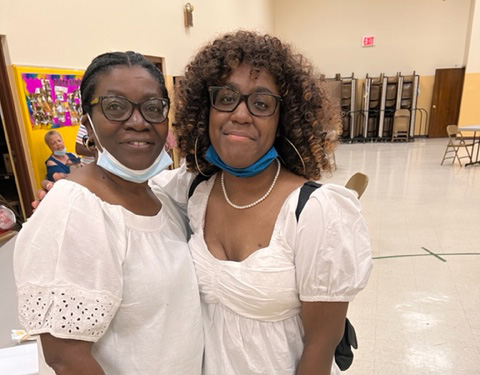
Photos above from Good Tidings Gospel Chapel Big Sisters Mentoring Ministry


Our three goals for mentoring — let me rephrase that — our three mandates for mentoring are that the ministry should be safe — for everyone involved, effective — the work accomplishes the goals and objectives of the program, and sustainable — it has the structure and resources to continue their work. 

Sustainability is one of the toughest issues. Dr. Wilson Goode, the former mayor of Philadelphia and founder of Amachi Mentoring, joined our board in 2011 because “you keep on going when others have left to focus on easier endeavors.” It’s tough to keep a nonprofit afloat. It’s not just finances. The biggest issue is that many programs are ineffective because they were either not trained well or failed to implement what they had learned, and as a result, their work was did not have the positive impact on kids and families that they desired. 

Clari Gilbert of Good Tidings Gospel Chapel in the Bedford Stuyvesant section of Brooklyn brought her team to our three-day CAYM Core Training in 2007 at a church in New York City. Since that time, they have run a successful mentoring ministry with girls in their church and neighborhood. Clari recently moved and advised their new team to contact CAYM for more training. Now the men in the church are involved as they are expanding the ministry to involve boys.

Wayside Teen Center in El Paso attended our training in New Mexico. Their director, Robert Cormell, recently contacted us to report that their work is still going strong. At our training in 2007 they learned the best practices of mentoring so that they were able to grow and sustain their ministry.

Not everyone who attended our events in CAYM’s early years were able to start and sustain their programs. Since that time we have upgraded our services that have enabled programs to build a solid foundation because we work with them to design the ministry to meet the needs of youth in their community, train them on mentoring best practices, and coach their team over the next year to help them implement their work. Larger programs go through our Quality Assurance program that verifies that they are following practices to ensure their work will be safe, effective and sustainable

Since the founding of CAYM, we estimate from the reports we have received that over 15,000 youth have been mentored. Lives are being transformed as caring Christians are carefully guided into mentoring relationships and then supported through a thorough supervision system by coaches.  These programs vary from churches, like Good Tidings, to community-based ministries such as Wayside Teen Center, and scores of others reaching diverse groups from juvenile offenders to youth who have been trafficked to young Christian men and women who are looking to become leaders. 

Our focus is on helping others sustain the work God has called them to do so that kids and their families are reached with the hope and love of Jesus Christ. We are thankful, and often amazed, at the dedication of the leaders and mentors in these ministries.


The Art of Being Faithful

I was shocked the morning he held out his tiny hand towards me inviting me to walk to the reading room to join the other preschoolers reading with their parents. The school asked me to be his reading buddy months prior, only to be rejected by him weekly for the greater part of the semester. Even the principal, who asked me to mentor this little, troubled tyke, suggested I move on and stop wasting time. I decided to stay faithful and show up – and this made all the difference in the life of this four-year-old known as “the worst kid in the school.” After entering the reading room my little buddy placed his head down on the table and covered both ears while I read a book about a little fire engine. It was going to be a long semester filled with deep learning about faithfulness in relationship – especially with those who come from difficult backgrounds. 

I’m set back a bit when I read scripture and see the giftedness of the “superstars.” Elijah called down lightning from the skies; David ran towards Goliath; Abraham lifted his knife over Isaac. It all seems a bit much when I look into the mirror and see a very average person staring back. Perhaps you relate when you think about life, ministry, and relationship. It would be good to see water gush forth from a rock or manna fall from the sky just a little more often. Yet, as I look deeper, I see a clear guiding principle that emerges in the life of each of these Biblical heroes. They “show up” and remain faithful which eventually bears fruit and longevity in their relationship with God and with others. Abraham faithfully waits 25 years for God to fulfill His word. David faithfully honors the king who hunts him and praises the God who allows it to happen. Jonathan faithfully warns his dearest friend to flee knowing that, in doing so, he forfeits his inherited right to a throne. Joseph faithfully shows mercy to his treacherous brothers and praises God for his divine plan. 

Faithfulness seems to be the key Biblical foundation for healthy spiritual life, mission work, and relational integrity. It certainly rings true in the mentoring world in which I currently work. It was also true in Romanian mission and state-side pastorates. Faithfulness keeps our family and marriages together when a troubled child acts out or when our kids struggle with social change issues or the appearance of a God who seems to allow terrible evil to exist in this fallen world. There are no easy answers to trauma-filled relationships; there is only faithfulness and love which holds us together. 

There are no easy answers to trauma-filled relationships; there is only faithfulness and love which holds us together. 

My little reading buddy and I read together every Friday morning at 7 AM. Somewhere along the line his face came up and his hands dropped to soak in the love this stranger extended during a short reading session. Something changed within him. Something changed within me. The “how” and the “when” eludes us; but the school noticed; the principal praised; the counselors spoke of a changed life and healed relationships at home. Faithfulness matters.

The Bible mentions God’s faithfulness as an inherent part of His love and righteousness and urges each believer to consider faithfulness as a key ingredient in the disciple’s pursuit of God. Many Psalms declare that “God’s love reaches to the heavens, His faithfulness to the skies.” (Psalm 36:5, 57:10). Psalm 100:5 reminds us that “The LORD is good, and his love endures forever; his faithfulness continues through all generations.” A key attribute of God’s love is his relentless faithfulness towards His people – even when His people act unfaithfully in return. God’s faithfulness rises as a central theme of the Old Testament describing His pursuit of a nation that often wanders away into all sorts of sin. His faithfulness provides the basis of hope for all followers of Christ. It provides a model for us to pursue in our own, often messy, relationships here and now. 

Brothers and sisters, do you see yourself as average today? Perhaps, you too, wonder if anything you do matters. The child (church, mission, job) in your life refuses to lift its little hand and move forward with you. Friend, look to the cross. Look to the tenacious, faithful lover of your soul who hangs there and cries out, “Father, forgive them for they know not what they do” (Luke 23:34). You are seen and loved faithfully. “God is not unjust; he will not forget your work and the love you have shown him as you have helped his people and continue to help them” (Heb. 6:10 – italics mine). Success, from heaven’s perspective, depends not on results achieved as much as it does on faithfulness pursued. Today I look in the mirror as an average minister. Behold! I see the tenacious, faithful, resurrected, King of Kings, staring back at me with wide open arms. Faithful friend, can you see Him in your reflection as well? 

Here is a song that might refresh your soul – Cochren and Co., One Day.  https://www.youtube.com/watch?v=LIWAoT9aX78

Ken Merrifield
Ken@caym.org

Mentoring young faith leaders

In light of the many stories we hear about youth who are abandoning the church, CAYM is helping the Church of God in South Carolina develop their Mentor1 program where teenagers desiring to become Christian leaders will be mentored by pastors and other church leaders. Research indicates that youth stay connected to Christ if they have intergenerational relationships and are involved in intergenerational ministry.

This denomination is seeking to reverse the trend of losing youth by mentoring young men and women at an age when they are making key decisions that may effect the rest of their lives.

This denomination is seeking to reverse the trend of losing youth by mentoring young men and women at an age when they are making key decisions that may effect the rest of their lives. CAYM and the Church of God designed a pilot project utilizing best practices to make mentoring safe, effective, and sustainable. This first step involves mentoring 25 youth who attend camp this summer with the long-term goal of instituting mentoring in their 300 congregations throughout the state.

Many denominations struggle to recruit young ministry leaders and, often, those who feel a call from the Lord lack access to ministerial experiences during their youth. Mentor1 is an attempt to bridge the gap by allowing exposure to meaningful practices within the confines of a safe, relational experience. These are exciting days for South Carolina youth who are the state’s future Christian leaders and we expect to see growth and learning for both mentor and mentee through these relational matches.

Mentor1 will target 16–18 year-old youth who sense a calling to serve our Lord in ministry. Each young person will be matched with either their pastor or a ministerial leader from their church to discover the mentee’s calling and practice that calling in real life experiences.

Society is anxious. We all sense it.

The question is: What are we going to do with it?

Here is the challenge: If we mentors sense the stress, we can be confident that our mentees also feel it as they navigate new schools, friendships, and trials this school year. A recent article by Drs. Saray Myruski and Kristin Buss, from Pennsylvania State University, confirms this hunch. The article, entitled Teens and Anxiety during Covid-19, makes the following conclusion.

Preliminary data from our own Penn State teen anxiety study reinforces this striking pattern of growing anxiety. Compared to pre-COVID-19, anxiety severity among our respondents has increased 29%, largely driven by significantly heightened generalized anxiety (up 45%) and school anxiety (up 143%).[1]

Since school anxiety is up more than 100% among our teen population, I reached out to an excellent school-based mentoring network located in south-central Texas and asked their leader how mentoring practitioners could help ease the anxiety load for their mentees during this chaotic season. Here are some suggestions from Mandy Benedix, Mentoring Specialist for Pearland ISD and founder of Rise Mentoring. Mandy highlights two important ways we mentors can help our mentees adjust to new situations and new school contexts.[2]

One of the best gifts we can give to our mentees as they work to adjust to new school environments is to normalize what they are feeling. The best way to normalize what they are feeling is to share how you are feeling the same. This non-judgmental approach creates a common space from which the two of you can start.

Secondly, remind your mentees that they can do hard things. Point to things they have overcome in the past and remind them that they can also overcome this hard thing. Most importantly, remind them that they don’t have to do it alone!

The late Murray Bowen, a key leader in the establishment of Family Systems Theory, supports Mandy’s thinking with his research. Bowen taught that any system, including societal systems, settle down when an outside calming presence (person) enters the system. Roberta Gilbert writes that the “coach’s [mentor’s] calm presence” is one of the two “invaluable opportunities to be of use” within anxious situations.[3] When the mentor responds calmly and consistently during stressful days, this helps the mentee to do the same.

I cannot help but think of how Jesus calmed a storm on the Sea of Galilee many years ago. In doing so, he also calmed the storm raging within the fear-ridden hearts of his disciples. Mentors, you can do the same. Your words and your life, during stormy seasons, will calm both storms and fearful hearts within the mentees you have grown to love and respect.


[1] https://covid19.ssri.psu.edu/articles/teens-and-anxiety-during-covid-19

[2] https://www.pearlandisd.org/mentoring

[3] Roberta Gilbert, The Eight Concepts of Bowen Theory, 24. (2006)

From Dark to Radiant

Brett’s dad left years ago and had little contact with him. That didn’t dull the pain when his father died a few years later as a result of alcoholism. Brett’s life turned dark in his thoughts, activities and attire. He contemplated ending his life as he withdrew to his basement to self-medicate through excessively playing video games.

One of Brett’s teachers convinced him to get a mentor through Kalamazoo Youth for Christ’s mentoring program. Through YFC’s Merge Mentoring Ministry, he was matched with Jerry – an average guy who loved God and was willing to walk with Brett in a one-on-one relationship.

Slowly Brett began to open up. Eventually he decided to show up at a YFC Bible study. Every once in a while, he would actually engage in the discussions. Soon he let an occasional smile pass his lips. It turned out Brett had an incredible sense of humor and an even better laugh.

Brett came to know Jesus as his personal savior during his freshman year. The next summer he served on a mission trip to the Dominican Republic. What?! This formerly dark and depressed young man signed up to get on a plane, live in uncomfortable surroundings, and serve children he didn’t know. He was playing with the kids, laughing with them, pushing them on the merry-go-round and carrying them on his shoulders.

During the trip, everyone on the team had the chance to share their testimony. Brett spoke some unforgettable words. He said, “If I hadn’t met Youth for Christ, I’d either be in a mental hospital, in jail, or dead.” Later in his time of sharing he said, “So I smashed my bong and decided to give my life to God.”

Jerry is a mentor with Kalamazoo YFC. Their Executive Director attended CAYM’s training in 2005.

The Importance of Humility in Leadership

“Now the man Moses was very humble, more than any man who was on the face of the earth.”[1]

If you lead a mentoring program, then you are a zealot. What else could motivate you to give up your life for young people who view life quite differently than you do? I was a zealot once and probably still am. The world needs Christian zealots. The world needs humble, Christian zealots, to be specific.

In 1991 I announced to our church that I was leaving my position as Youth Pastor to go to Romania as a missionary to this recently opened communist nation. Lilly opposed.[2] She stood up and said publicly that I “should not be abandoning our youth to go and help communists.” Many years later, upon returning from a decade’s worth of ministry in Romania, I had the privilege of pastoring Lilly again as her Sr. Pastor. Lilly is my friend. She and her husband, who by the way never had kids in my youth program, have been life-long supporters of our ministry.

Humility is important for many reasons. One is that longevity in ministry and relationships never happens when the leader is proud and offensive. While Moses was treated offensively and misunderstood multiple times by the Israelites, his humility kept his relationships intact and sustained his calling to lead them towards Canaan. Here are a couple of other reasons humility remains crucial in current day Christian leadership.

God loves humility and expects Christian mentoring programs to be led with humility just as His son led with humility. “As the Father has sent Me, I also send you.”[3] This text reminds us that we all have a mission. We can see that part of the verse clearly. There is, however, more to this verse than just a calling to mission. A clear translation would be, in the same way that the Father sent Jesus, He also sends us. In the way of the stable. In the way of rejection. In the way of the cross. In the way of the Humble Servant.

The Scriptures teach clearly that God is opposed to the proud but gives grace to the humble.[4] Leader, it is never easy to hear others malign your efforts to better the lives of our youth or your zealous efforts to make a difference through mentoring. When this happens – and it will happen if you lead long enough – respond in humility as did our Savior, Jesus Christ.

Finally, as you lead your mentoring program, remember that your leadership provides an important role model for the youth of our nation. Regardless of your political persuasion, you probably recognize the trend in national leadership over the past few decades has moved away from humility and selflessness in favor of pride and selfish idealism. Many are disillusioned by this trend. The youth who are matched in your program, more than ever, need to see a different type of leadership model. They need to see Christ embodied not only in our words, but in our leadership and behavior as well. Christ accomplished the Father’s will through humble obedience. You can do the same. Christ, in humility, suffered rejection. You may suffer as well. Christ’s humility and love changed the world. My dear zealot, you will do the same!

-Ken Merrifield


[1] Numbers 12:3 – NASB

[2] Lilly is a pseudonym.

[3] John 20:19 – NASB

[4] 1 Peter 5:5 – NASB

Jesus Was a What?!

Image from Common Sense Media

We tend to see Jesus through our own lenses — even when looking at his words and actions through the scripture. One young woman’s description of our Savior took our small group by surprise. Did she really just say that?

The words came out innocently with exhilaration. Our Zoom Bible study doesn’t give us many opportunities to see what makes people tick. Bethany, a scientist in the nanotechnology industry, let us into her spirit in one quick phrase.

We were studying the Gospel of Mark where Jesus cleared the temple and called out the hypocrisy of religious leaders. Her spontaneous reaction gave me a moment to pause before I broke out in laughter to her comment, “Jesus was a badass!” Bethany asks the kind of questions that you’re “not supposed to” inquire in Sunday school. She is disturbed at some of Jesus’ teaching, puzzled by others, and mostly un-churchy even though she grew up in a church. She does all this with a sincere faith and commitment to follow our Lord.

“Bethany, that sounds like the title of your upcoming bestselling book,” I responded as the group’s surprised laughter subsided.

I’m sure that not everyone can appreciate her interpretation of Jesus’ character. Serah, an African grad student in Boston, was somewhat shocked. “Isn’t that a bad thing?” We explained how this colloquialism could be used as a compliment as well as a pejorative description. She caught on, but she didn’t seem impressed.

Bethany looked at the scripture much like the kids I’ve worked with in mentoring ministry over the years: unfettered and unfiltered by established religious norms. One girl who read through the Old Testament for the first time exclaimed to me, “There’s a lot of sex in the Bible.” A very true statement which I’ve never heard expressed so plainly. Somehow, I want to read through the Bible in the same way.

While I have no interest in engaging in heresy or disrespecting our Lord, seeing the scripture without all the filters I’ve put in place through the years helps me find Jesus and God the Father in more penetrating ways. In one manner, I need to let Jesus’ words and actions call out my own hypocrisy, whether that be in the way I judge others or the manner in which I treat those who disagree with me.

So, I might not be exclaiming at church, “Jesus was a &%#@!*,” but seeing the scripture with fresh eyes will bring me closer to him.

-Peter Vanacore